
Originally published October 2021. Fully rewritten March 2026 to reflect current YouTube advertising formats and New Zealand viewership data.
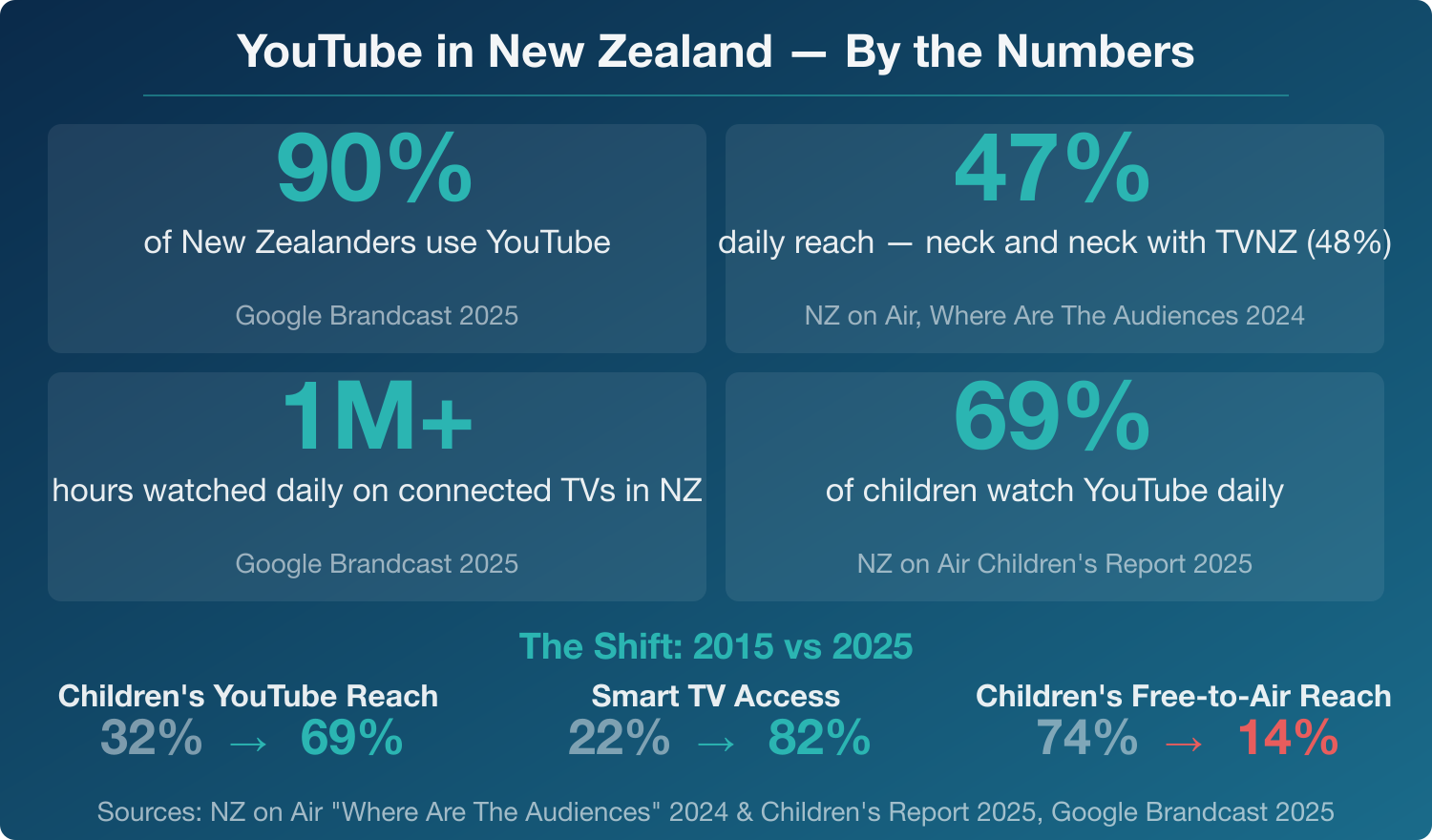
YouTube is used by 90% of New Zealanders and now matches traditional TV for daily reach. If your business has a story worth telling — and most do — YouTube gives you a way to tell it that no other platform can match. Here’s why it deserves a place in your marketing mix, and how to make it work.
YouTube Is Now as Big as TV in New Zealand
Most business owners I talk to still think of YouTube as a place teenagers go to watch gaming videos. That hasn’t been true for a while.
According to NZ on Air’s Where Are The Audiences 2024 research, YouTube now has a 47% daily reach among New Zealand adults — essentially neck and neck with TVNZ’s combined brands at 48%. Among 40-59 year olds, YouTube reaches 63%, and that number has been climbing steadily.
Google’s own data puts New Zealand YouTube penetration at 90.2% of the population, with Kiwis watching over one million hours of YouTube on connected TVs every single day.
The shift is even more dramatic with younger audiences. NZ on Air’s 2025 Children’s Media Report found that 69% of children watch YouTube daily — up from 32% in 2015. Free-to-air TV has gone the other direction, dropping from 74% daily reach to just 14% over the same period.
This isn’t a niche platform. It’s where New Zealanders spend their time.
Why Video Connects Differently
What is it that makes your business great?
Perhaps it’s a heartwarming story, an innovative product or service, or a fresh approach to sustainability. Whatever it is, that’s what your marketing needs to get across — and video does it in a way that text and images can’t.
Harvard Business Review research found that emotionally engaged customers are less price-sensitive, three times more likely to repurchase, and at least three times more likely to recommend a product or service. Video advertising gives people a chance to see a brand in action — to connect with the faces behind it, understand the attitude, and see how a product or service actually works.
The great advantage YouTube has over television is the two-way nature of it. People can leave comments, share videos, and engage directly. That feedback loop helps you understand your audience and refine your approach over time.
Ad Formats That Fit Different Goals
YouTube advertising has evolved significantly. There’s now a format for almost every marketing objective and budget.
Skippable In-Stream Ads
The classic YouTube ad that plays before or during a video. Viewers can skip after 5 seconds, and you only pay if someone watches at least 30 seconds (or the whole ad if it’s shorter) or clicks through. This makes it a genuinely cost-effective format — you’re only paying for engaged viewers.
Non-Skippable Ads and Bumpers
Short, punchy ads of 15 seconds (non-skippable) or 6 seconds (bumpers) that capture attention without overstaying their welcome. We’ve seen these work particularly well for service businesses with a clear, direct message — a dynamic presenter, a straightforward offer, and a clear call to action are often all you need.
Some businesses use 6-second bumpers to complement longer “hero” ads, keeping the brand front of mind while the longer piece does the storytelling. It’s a strategy that balances awareness with depth.
YouTube Shorts Ads
YouTube Shorts — vertical, short-form videos — now sees over 70 billion daily views globally. Ads appear between organic Shorts in the feed, run up to 60 seconds, and play without a skip button. If your audience skews mobile or you already have short-form content, this format is worth testing.
Demand Gen and Performance Max
For businesses focused on conversions, Google’s newer campaign types include YouTube as part of a broader mix. Demand Gen campaigns extend across YouTube, Discover, and Gmail, while Performance Max uses AI to optimise across all of Google’s channels — including YouTube — automatically. These are particularly useful if you want to reach people at multiple touchpoints without managing separate campaigns for each.
Targeting That Goes Beyond Demographics
One of YouTube’s real strengths is how precisely you can target your audience. The options have expanded considerably beyond basic demographics.
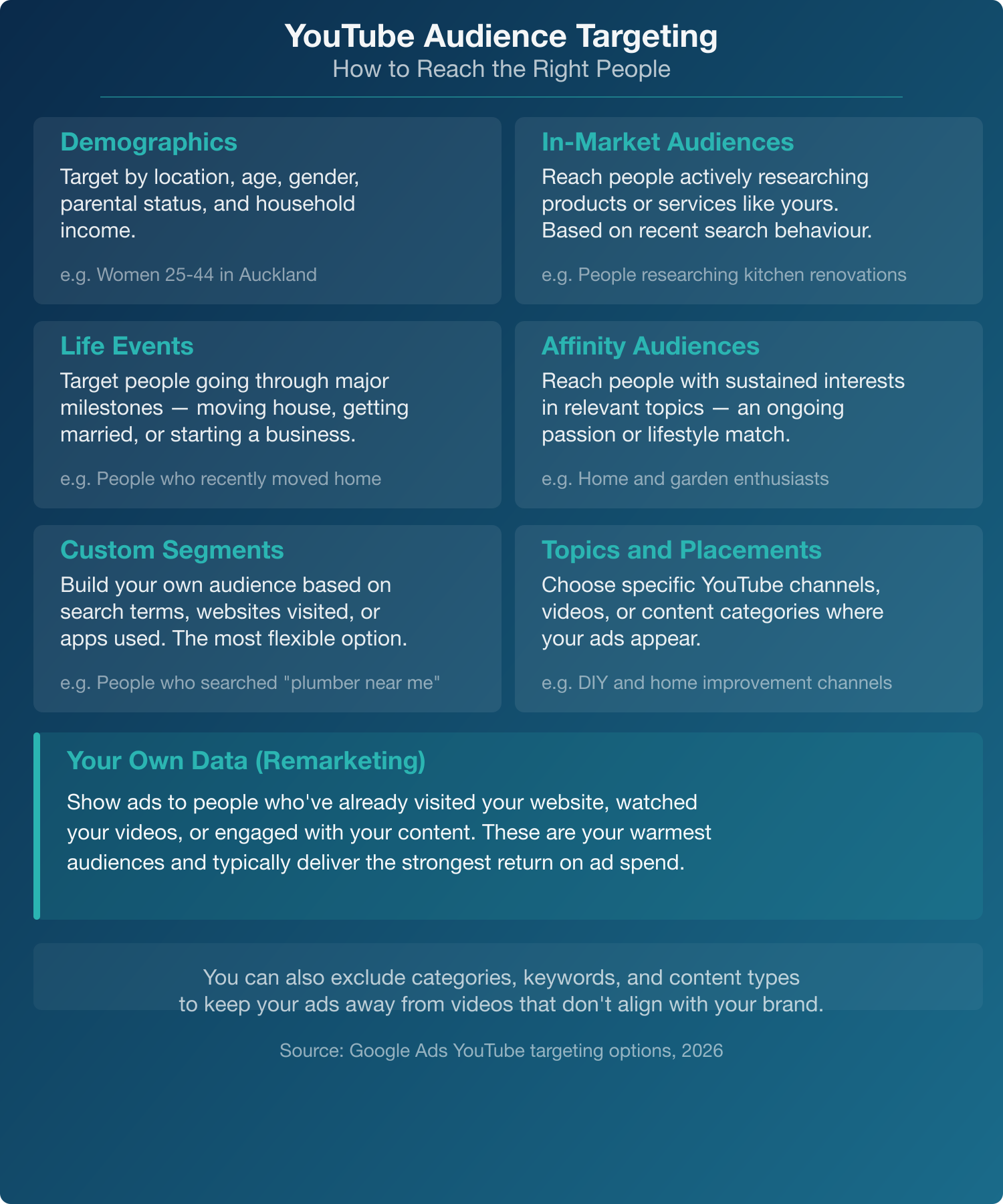
Getting the targeting right takes some experimentation. The combination of audience targeting and content targeting is where most of the value sits — and it’s an area where we spend a lot of time with clients getting the balance right.
Making It Work
Success stories like US mattress company Tuft and Needle demonstrate the value of using real people to tell your story. Authenticity matters. Polished corporate videos have their place, but viewers often respond better to genuine people talking about what they do and why they do it.
A few things we’ve found work well:
- Keep it concise. 30 seconds to two minutes is the sweet spot for most ads. Long enough to tell a story, short enough to keep people watching.
- Hook early. You have about 5 seconds before the skip button appears. Lead with something interesting, not your logo.
- Clear call to action. Tell people what to do next — visit a page, make a call, request a quote.
- Match the format to the goal. Bumpers for awareness, skippable in-stream for consideration, Demand Gen for conversions. Don’t try to do everything in one video.
The Connected TV Opportunity
One development that’s particularly interesting is the rise of YouTube on smart TVs. With 82% of New Zealand households now having a smart TV (up from just 22% in 2015), YouTube has essentially become a television channel.
This matters for advertisers because connected TV viewing tends to be more lean-back and attentive than mobile viewing. People are watching on a big screen, often with others, and they’re less likely to be multitasking. For brand-building video content, that’s exactly the viewing environment you want.
Is YouTube Right for Your Business?
YouTube works best when you have a story worth telling and a product or service that benefits from being shown rather than described. It’s particularly effective for:
- Service businesses where trust and personality matter
- Products that look good in action
- Businesses with a strong point of difference they can demonstrate
- Brands wanting to build awareness alongside their search campaigns
If you’re already running Google Ads, adding YouTube can complement your search campaigns by reaching people earlier in their decision-making process. We help businesses build social media advertising strategies that integrate YouTube with their broader marketing — from strategy through to execution.
If you’d like to explore what YouTube advertising could do for your business, get in touch and let’s have a conversation about it.