
Ark Advance turned 23 this month. Looking back, I can point to specific moments where a different decision—or simply knowing what I know now—would have saved me stress, money, or sleepless nights.
If you started a business in 2025 or you’re planning to launch in 2026, here are a few lessons that took me far too long to learn.
Your Brain Has a Context Limit (Just Like AI)
Working with AI has taught me something unexpected about how our own minds operate.
Every AI chat has a context window—a finite amount of space to work with. As you use it up, the quality of answers can decline. The AI effectively gets “tired.” Managing that context is a core challenge in making AI useful.
Our brains work the same way. We have daily context and we have longer-term context that builds up over weeks and months of grinding away at problems.
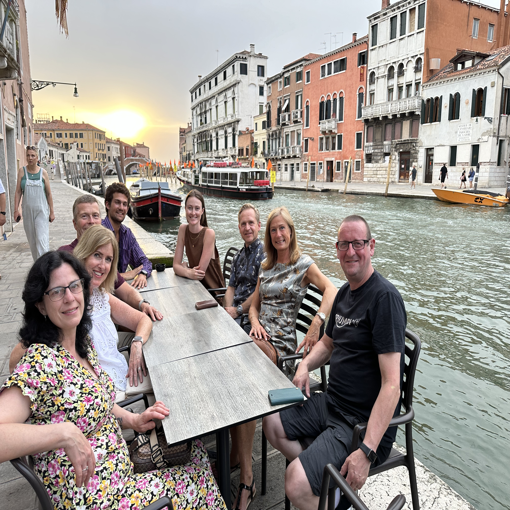
Years ago, a coach told me I wasn’t taking enough breaks. I nodded, ignored the advice, and kept hammering away. Then last year, I finally took a proper break—four weeks travelling through Italy with the family.
When I came back, everything looked different. Problems I’d been stuck on suddenly had obvious solutions. Ideas that would never have occurred to me were suddenly clear. My context had completely reset.
Now I protect my context deliberately. I get away from the desk during the day. If I’ve had a few intense days, I follow them with something lighter. And I take proper holidays.
If you’re a Type A personality who thinks rest is for other people, consider this: your brain needs fresh context to do its best work. Burning through your mental bandwidth without breaks doesn’t make you more productive—it makes you less clever.
Small Businesses Can Do Big Things
A few years back, one of the world’s largest search companies invited us to trial new advertising software. We were one of several agencies across New Zealand and Australia selected to test it across our client accounts.
I was sceptical, but we agreed. They assured us the technology would improve performance if we gave it time. So we ran it for three months, as did all the other agencies in the trial.
At the end, we pulled the data and analysed it properly. The result? The software hadn’t improved performance—it had done the opposite. It had cost our clients money.
We went back to them with hard evidence. To their credit, they took the data seriously, investigated, and refunded every affected client.
Here’s what surprised me: we were the only agency in Australasia that had done the detailed analysis and challenged them on it. Every other agency—including much larger ones with bigger accounts—had simply accepted the results at face value.
The lesson? Don’t assume the big players have it figured out. Small businesses that pay attention and do the work can absolutely hold their own against anyone.
Build Bulletproof Processes Before You Need Them
Midway through our 23 years, we were managing email campaigns for major brands—multiple campaigns per week going out to hundreds of thousands of subscribers across New Zealand and Australia.
We thought our sign-off process was solid. It wasn’t.
One Friday, just after midday, we launched a campaign for a large client. The whole team then headed out for our regular Friday lunch. During the meal, we got urgent calls: there was an error in the campaign. The “from” address showed our business name instead of the client’s.
The client had signed it off. We’d signed it off internally. Everyone had looked at it, and everyone had missed it.
We rushed back to stop the send, but stopping a large campaign takes time. Most messages hadn’t gone out yet, but a sizeable chunk had—all appearing to come from the wrong company.
The client was gracious about it, but the reputational damage was real. It created weeks of stress and plenty of sleepless nights.
Only then did we tear apart our approval process and rebuild it from scratch. The new system was genuinely bulletproof—so effective that we ended up training other large corporates on it.
But here’s the thing: we could have built that process from day one. We just didn’t think we needed to until something went wrong. Don’t wait for your own “things hit the fan” moment. Build the rigorous processes now, while everything’s calm.
Find Your People Early
For the first 15 years, I ran this business essentially alone. I’d occasionally work with a coach and I read plenty of books, but I didn’t have an ongoing group of peers I could talk to honestly about the challenges of running a business.
Then I joined BNI, and things shifted.
Suddenly I was surrounded by other business owners facing the same issues: difficult customers, staff challenges, cash flow worries, the mental load of being responsible for everything. Problems I thought were unique to me turned out to be universal.
A problem shared really is a problem halved. Not because the group solves it for you, but because knowing you’re not alone makes the weight easier to carry. And yes, the business referrals are a genuine bonus.
If you’re running a business without a peer group around you—whether that’s a networking organisation, a mastermind, or just a regular coffee with other founders—find one. The earlier you do it, the easier those tough early years become.

The Only Way to Last
Running a business for 23 years isn’t about willpower. Willpower won’t get you through two decades of headwinds—and the last few years have had plenty of those.
You have to genuinely love what you do. If you don’t, change what you’re doing until you do.
When you love the work, the headwinds just keep you cool.
Planning for 2026?
If you’re thinking about how to position your business for the year ahead, we offer a free 60-minute Marketing Message Audit. We’ll give you honest feedback on whether your current messaging is strong enough to drive results—and specific ideas on what to improve.
Book your free Marketing Message Audit here and start 2026 with clarity.