
A client came to us with a fixed ad budget, a competitive market, and not enough leads. We didn’t change their keywords or their bidding. We changed what their landing page said. Conversions went up 118%, cost per conversion dropped 54%, and the budget barely moved. Here’s what we found and why it worked.
Our client sells industrial equipment out of Brisbane, operating in a market with half a dozen competitors all fighting for the same customers. Same type of equipment, similar price points — the kind of space where it’s genuinely hard to stand out.
Their advertising budget was fixed — there was no option to simply spend more — and their sales team needed more conversations.
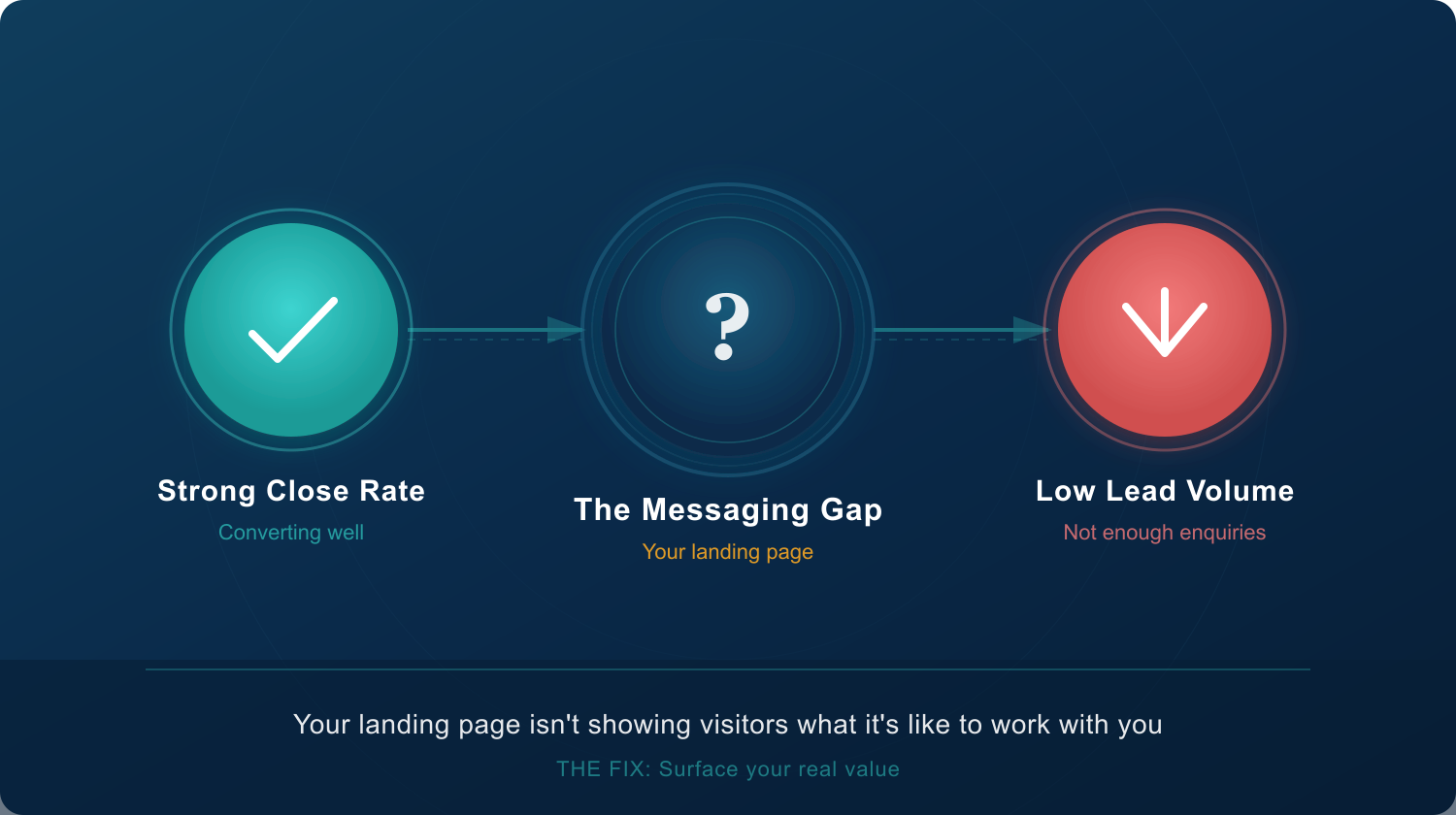
But here’s the thing that stuck out to me early on. Once they actually got someone on the phone, they were really good. Their close rate was solid. When a lead came in, the team knew exactly how to handle it. The problem wasn’t what happened after someone enquired. The problem was that not enough people were enquiring in the first place.
That’s a clue, if you know what to look for.
The Gap Nobody Notices
High traffic. Low conversion rate. High cost per lead. If that sounds familiar, the instinct is usually to adjust the campaign — try different keywords, change the bidding, tighten the targeting.
Sometimes that works. But sometimes the issue isn’t the campaign at all. It’s that your landing page is underselling you.
This is surprisingly common, and I think the reason it goes unnoticed is that the people who run the business are too close to it. They know what happens when a customer calls. They know how thoroughly they look after people. They just assume everyone else knows too.
They don’t. A visitor on your landing page has no idea what it’s like to work with you. All they’ve got is what’s on that page, and if the page reads like every other supplier in your industry, you look like every other supplier in your industry.
What We Found
I got on a call with their Senior Sales Manager. Not to talk about ads or keywords — just to understand how they actually worked with customers.
What came out of that conversation was genuinely interesting. The equipment they sold was similar to what their competitors offered — this wasn’t a situation where the product itself was dramatically different. But the way they sold it was. They didn’t just take an order. They sat down with each customer and worked through exactly what machine was right for their specific situation. They thought about longevity. They thought about return on investment over years, not just the upfront cost.
They’d sometimes talk a customer out of a more expensive option because it wasn’t the right fit.
It was a properly consultative process. The kind of thing that, once you experience it, makes you a customer for life.
None of this was on their landing page.
Their page talked about their products. It listed specifications. It was perfectly fine — and completely interchangeable with any of their competitors’ pages. All that care, all that expertise in guiding customers to the right decision, invisible.
Translating the Experience
What we did next was pretty simple, at least in concept. We took everything I’d learned about their actual sales process — how they treated leads, what made the experience different, why customers stuck with them — and we wrote it into the landing page.
We weren’t inventing a message. We were surfacing one that already existed inside the business but had never made it onto the page. The landing page went from describing what they sold to describing what it was like to buy from them.
We updated the ads to match, so the whole journey felt consistent. The budget barely changed — costs went up 0.42%.
Here’s what happened:

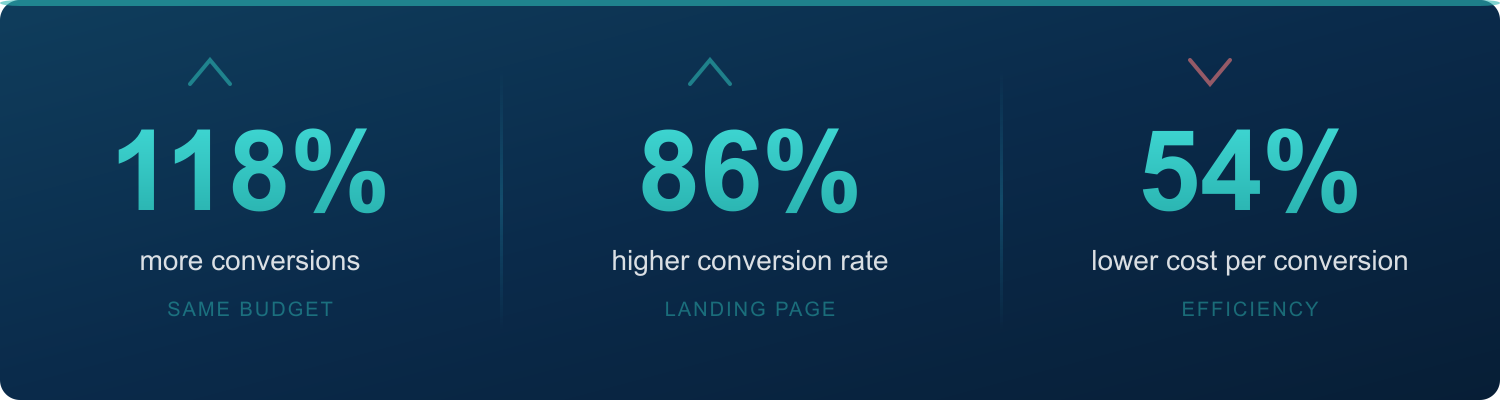
Conversions increased 118%. The landing page conversion rate jumped 86%. Cost per conversion dropped 54%.
Same market. Same competitors. Same budget. The only thing that changed was what the page said.
The Bit That Keeps Coming Back to Me
I’ve been thinking about why this worked so well, and I keep coming back to the same idea: people aren’t just buying a product or service. They’re buying the experience of being a customer. And if your landing page doesn’t give them a feel for that experience, you’re asking them to take a leap of faith that most of them won’t take.
This client’s sales team was their biggest asset. The way they looked after people was the reason customers stayed. But from the outside — from the perspective of someone Googling industrial equipment in Brisbane — none of that was visible. They looked the same as everyone else.
If your close rate is strong but your lead volume isn’t where it should be, it might be worth asking: does your landing page actually reflect what it’s like to work with you? Not what you sell, but how you sell it. Not the features of your product, but the experience your customers get.
Because in a competitive market where everyone’s bidding on the same keywords with the same budget, the landing page that makes someone feel understood is the one that gets the enquiry.
Worth a Conversation
If any of this sounds familiar — strong sales process, decent traffic, but the leads aren’t matching up — we can take a look. Our messaging audit digs into the gap between what your business actually delivers and what your landing page says you deliver. It’s part of how we manage Google Ads campaigns — not just the clicks, but what happens after them.
Sometimes the best marketing asset you have is already inside your business. It just hasn’t made it onto the page yet.
Give us a call on 0800 893 477 or use the form below.